Room Darkening
Bedroom
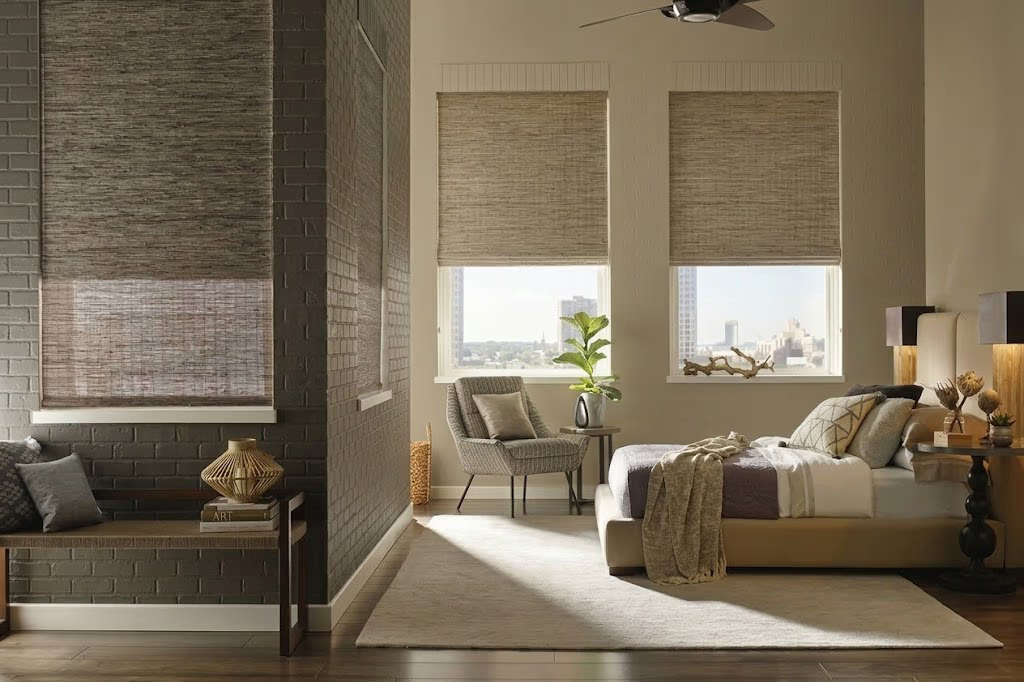
Bedrooms need dependable nighttime privacy and often benefit from stronger light control than the rest of the house. Cellular shades, roller shades and dual-layer treatments can range from softly filtered daylight to room darkening or blackout-rated fabrics. The right choice depends on how dark you actually need the room and how you want it to look during the day.
Discount Best Blinds and Shutters compares fabrics at the bedroom window, where edge gaps and exterior light are easier to evaluate than in a showroom.
Get a Free Quote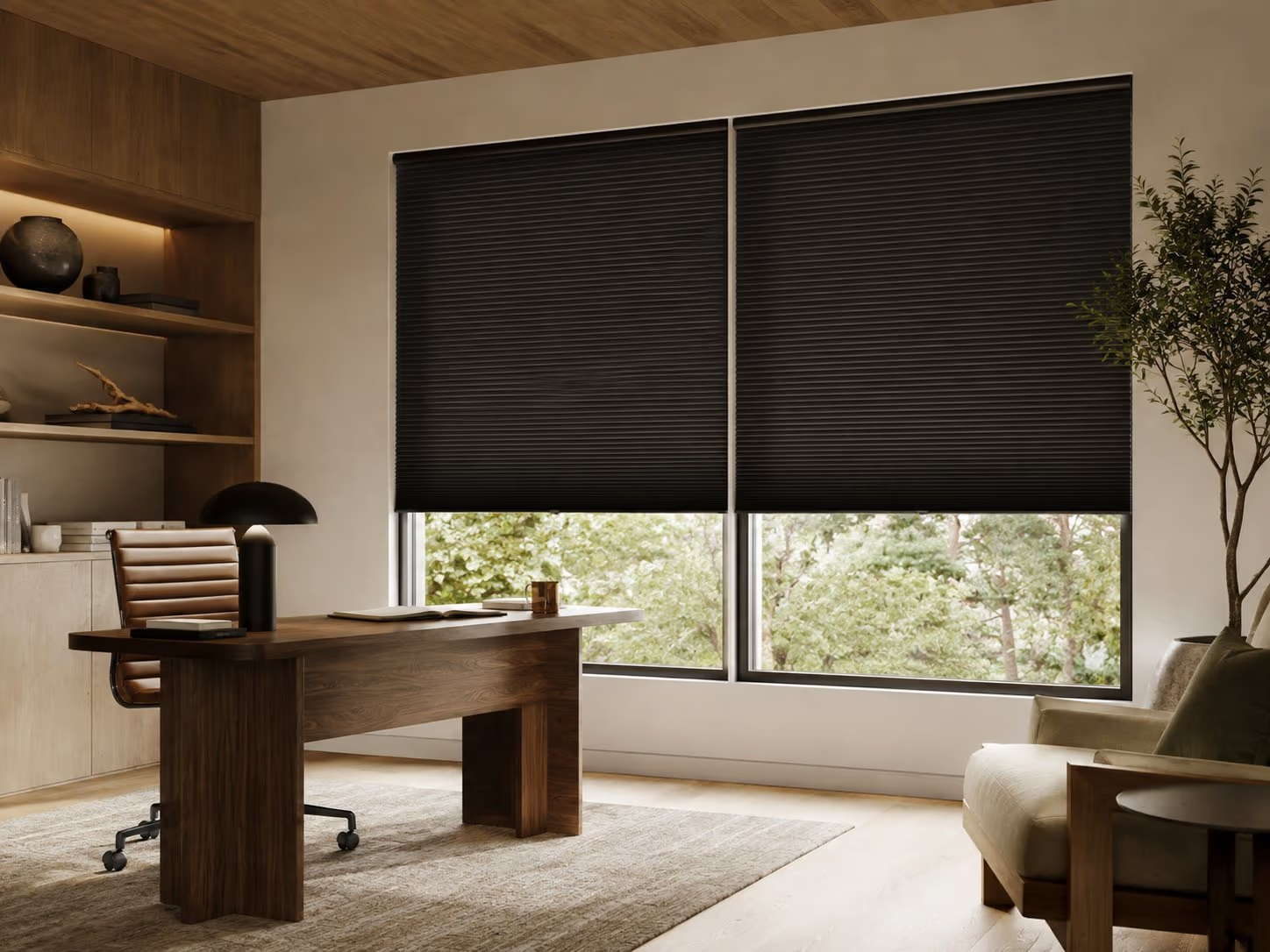
Bedroom Window Treatments
We focus on measurable light control and fit rather than promising a sleep outcome. Persistent sleep problems are a health issue, not something a window treatment can diagnose or treat.
This is useful when the homeowner does not want a bedroom window to look permanently dark during the day. It also reduces the need to stack two unrelated treatments, although the headrail and operating system should still be evaluated for the actual opening.
If the bedroom is noticeably uncomfortable near the window, verified product insulation data is more useful than a generic energy-savings claim.
We measure those details before selecting the final product so darkness and privacy are not undermined by a treatment that does not fit the opening cleanly.
Get a Free QuoteWhat to consider
The right fit for the space
Start With How Dark You Want the Room to Be
Some people are comfortable with a room-darkening shade that reduces most outside light, while others want the strongest possible blackout for streetlights, early sunrise or shift-work schedules. The distinction matters because “room darkening” and “blackout” are not interchangeable performance claims.
Dual-Layer Shades Let Daytime and Nighttime Needs Use Different Fabrics
Duolite® and other dual-layer configurations combine two different light-control surfaces in one window system. A lighter fabric can handle daytime privacy or softened sun, while a darker layer can be used at night.
Insulating Bedroom Shades Can Improve Comfort Near the Glass
Cellular shades create trapped-air pockets that reduce heat transfer at the window, which can make a bedroom feel less drafty in winter or less exposed to hot glass in summer. The amount of utility savings depends on the window and house, so a fixed overnight savings percentage should not be promised.
Window Type and Furniture Placement Affect Bedroom Shade Choices
Bedrooms may have narrow casements, French doors, large picture windows, windows behind a bed or openings close to built-in furniture. Those conditions affect whether an inside mount is possible, where controls can be reached and whether a shade can clear handles or trim.
Use Current Cordless or Motorized Controls in Children’s Bedrooms
For bedrooms used by children, operating-system safety is a primary requirement. Current cordless or motorized products eliminate the long accessible cords associated with older treatments. We use the manufacturer-approved system for the selected shade and follow current ANSI/WCMA requirements.
Find the Right Level of Privacy and Darkness for Your Bedroom
Schedule an in-home consultation to compare room-darkening, blackout, cellular and dual-layer options at your actual windows. We can also review motorized morning and evening routines if automation is useful.